



Friday, 25 September 2026 01:30 AM
Company Update
Mountaineer Darina Borodina, who led the response and returned two weeks later to the summit alone, calls on climbers to match the route to their experience: "The cost of a mistake is high."
OSH, KG / ACCESS Newswire / September 25, 2026 / On the evening of 14 July, a team preparing to summit Lenin Peak (7,134 m) found a lone climber unconscious in a tent at Camp 3, at 6,100 meters. Instead of climbing, the team spent the night keeping him alive - on the oxygen cylinder they had carried up the mountain for their own summit push - until a rescue party could reach them. Russian mountaineer Darina Borodina, who led the response, abandoned her summit attempt and descended.
The climber, a young Polish mountaineer attempting the peak solo, was evacuated to hospital in Osh and died [nine] days later. Borodina returned to the mountain alone on 23 July and reached the summit on 27 July. She is now speaking publicly about what the rescue showed her about preparation for high-altitude climbing.
What happened at 6,100 meters
Borodina's team had moved up to Camp 3 to begin its summit push on Lenin Peak, one of the harder seven-thousands in the Pamirs. A single tent caught Borodina's attention because it was not a high-altitude tent. Inside, the team found a climber unconscious and unresponsive.
His condition was critical. The clinical picture pointed to severe altitude illness, including cerebral oedema - one of the most dangerous complications of acute mountain sickness, which in combination with severe hypoxia can impair consciousness within hours and threaten life.
The team radioed the Ministry of Emergency Situations and requested an evacuation, then began treatment. Two days of snowfall meant the Sherpa rescue party had to break trail through deep snow to reach 6,100 meters, and the climb took several hours. In the meantime, the team:
- moved the climber into one of their own tents and into their high-altitude sleeping bag;
- opened their reserve oxygen cylinder - carried for their summit attempt and kept for emergencies - and monitored his oxygen saturation;
- managed an obstructed airway, which made oxygen delivery considerably harder;
- took turns massaging his limbs to maintain peripheral circulation and limit cold injury;
- built an improvised stretcher from the ropes they had with them.
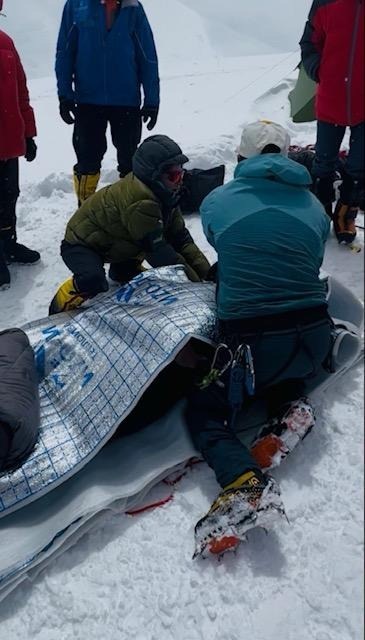
"Sometimes, when we gave him oxygen, he would open his eyes slightly and his pulse would rise," said Borodina. "That gave me hope that his condition would stabilize."
The team stayed with him until the rescue party arrived and took over, then began the descent to base camp for evacuation to hospital.
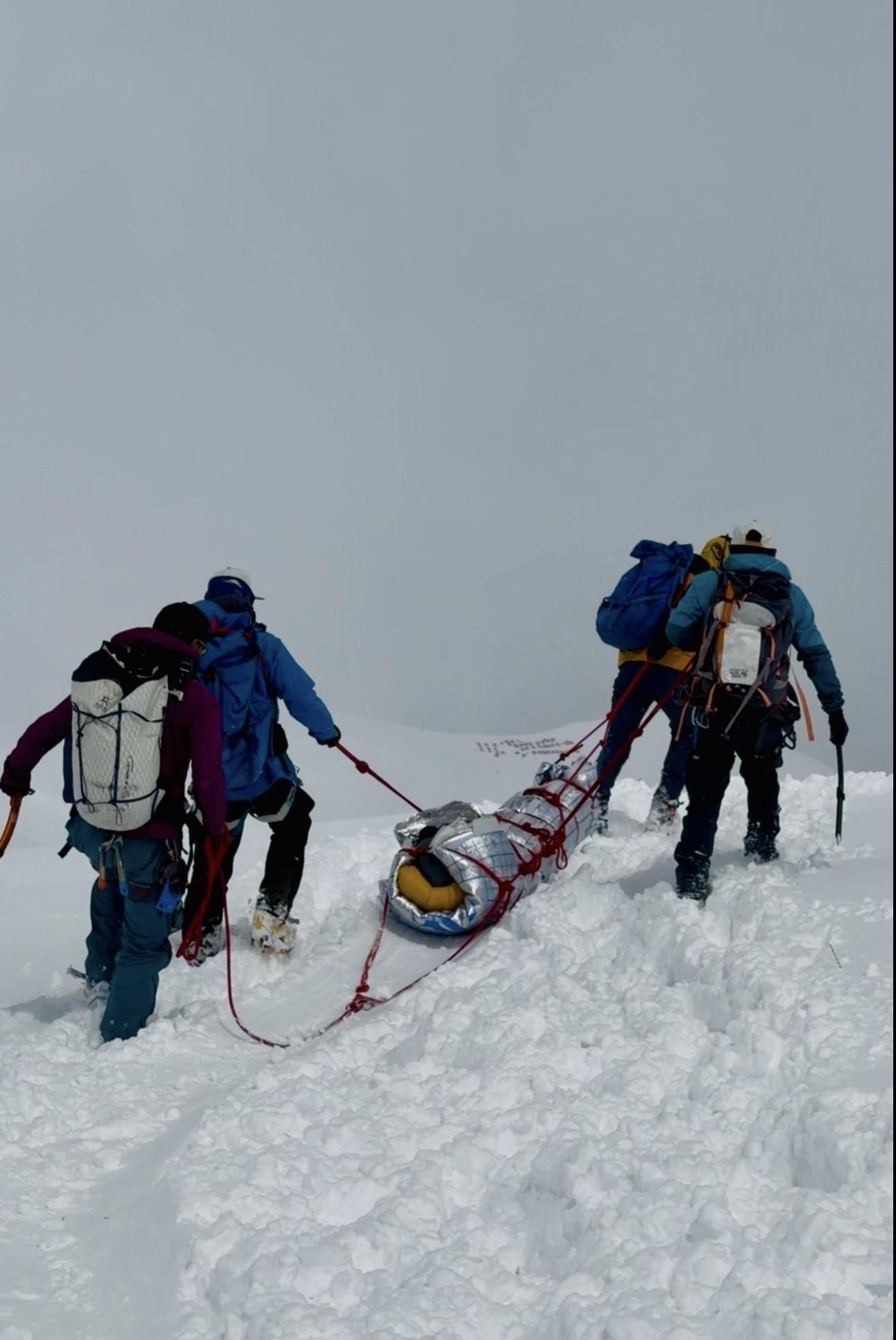
What Darina Borodina did that night was an act of true heroism. A woman leading her team at 6,100 meters, she did not walk past the tent and she did not leave the Polish climber alone. She stayed at his side and gave him the oxygen she had carried up the mountain for herself. At that altitude oxygen is not a comfort; it is what keeps a person alive, and a reserve cylinder is a climber's last protection if something goes wrong. By giving it away, Borodina put her own safety at risk, and then gave up her summit. In doing so she showed the world what a human being should be: that another person's life matters more than any peak, and that caring for others is the first duty of everyone on the mountain.
The decision to turn back
On the night of 15 July, with the rescue over, Borodina gave up the summit attempt and descended. The reserve oxygen was gone, and so was the weather window the team had climbed for.
"I wasn't ready mentally," said Borodina. "After many hours at altitude beside someone hovering between life and death, you rethink everything that is happening. That night I couldn't think about the summit; my thoughts were elsewhere."
Osh, and the news that followed
Three days later Borodina traced the hospital in Osh where the climber had been admitted. She met his doctors and members of his family, and spent a long time with his father, describing how the rescue had unfolded. From the doctors she learned that he had come through a complex craniotomy and was in a coma. His chances were slim; his family had not given up hope.
"It took time to come to terms with what had happened and to gather my strength," she said of those days.
The message reached her on the mountain. Somewhere on the way to Camp 1 on 23 July her phone found a signal, and his father's message arrived: his son's heart had stopped.
"It was hard to accept that neither my team on the mountain nor the doctors in the hospital had been able to save him. The mountains don't forgive mistakes."
Back up the mountain
Borodina decided within days to go back. It meant starting again: the return to base camp, the acclimatization, the same camps, and the place where the rescue had ended her first attempt.
She left base camp alone early on 23 July. She began the summit push at 23:30 on 26 July and reached the top at 12:20 the following day, carrying the flag of Milaf, which supports her expeditions. Conditions were considerably worse than forecast - headwinds of 40-45 km/h and driven snow that intensified through the night as she gained altitude - and on the way up she passed groups who had turned back from their own attempts. She was back at base camp on 29 July.
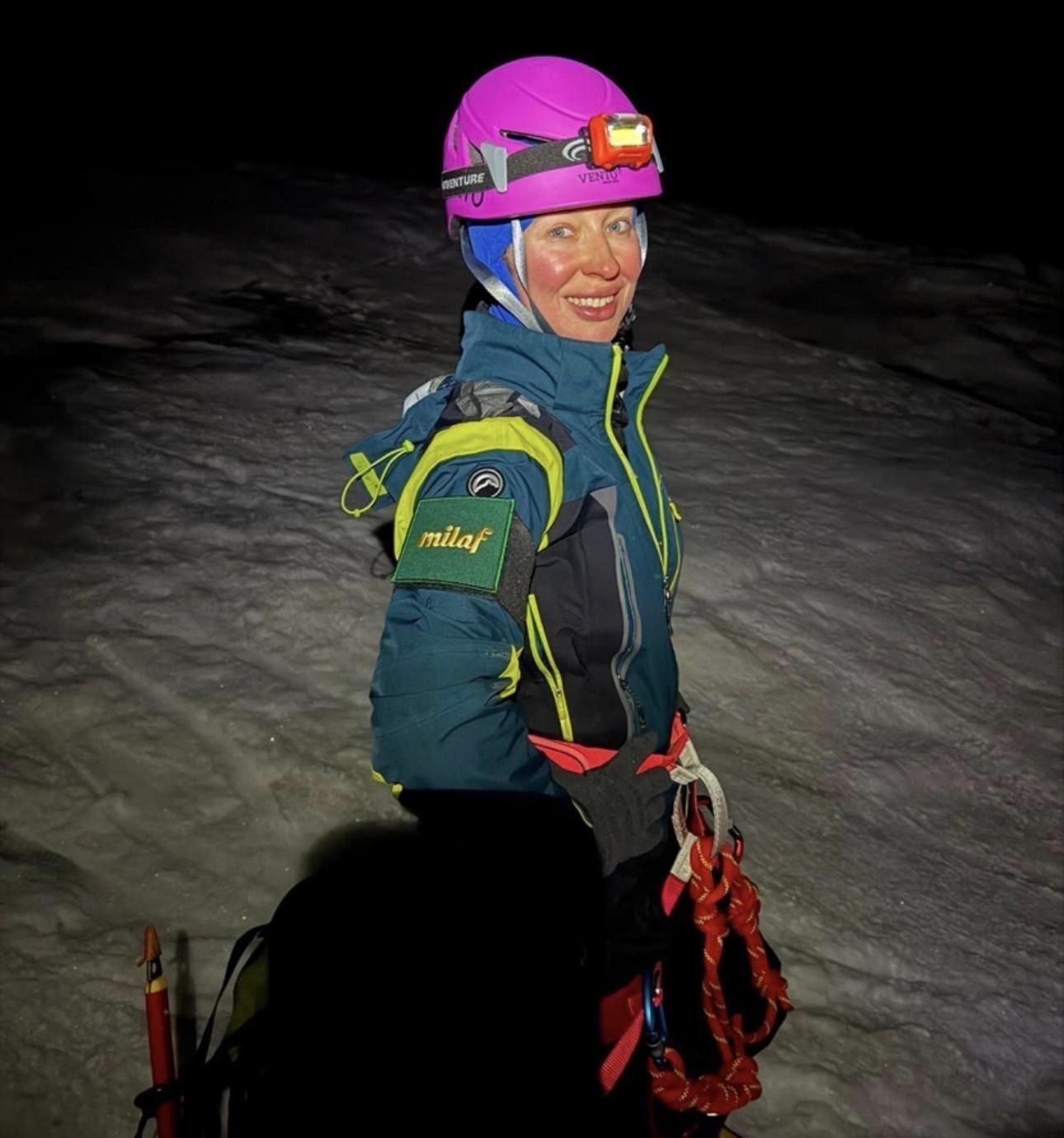
The expedition took a month in total. A cyclone that settled over the Tien Shan for close to a week had already forced a long wait at altitude before the events of 14 July.
What Borodina wants climbers to take from it
Borodina's message is about preparation, not blame. A route's difficulty, she argues, must be measured against three things at once: the climber's experience, their physical preparation, and whether help can actually reach them where they intend to go.
"You need to pay attention to your own health, listen to your body, and be able to assess your condition realistically," she said. "The cost of a mistake is high. The difficulty of a route should match not only your desire, but also your experience, your preparation, and the possibility of getting help."
Two details from 14 July make the point. The tent at 6,100 meters was not built for that altitude, which is what drew the team's attention in the first place. And the oxygen that kept the climber alive through the night was not his - it belonged to a team that had carried it up for its own summit push and happened to be camped nearby.
About Darina Borodina
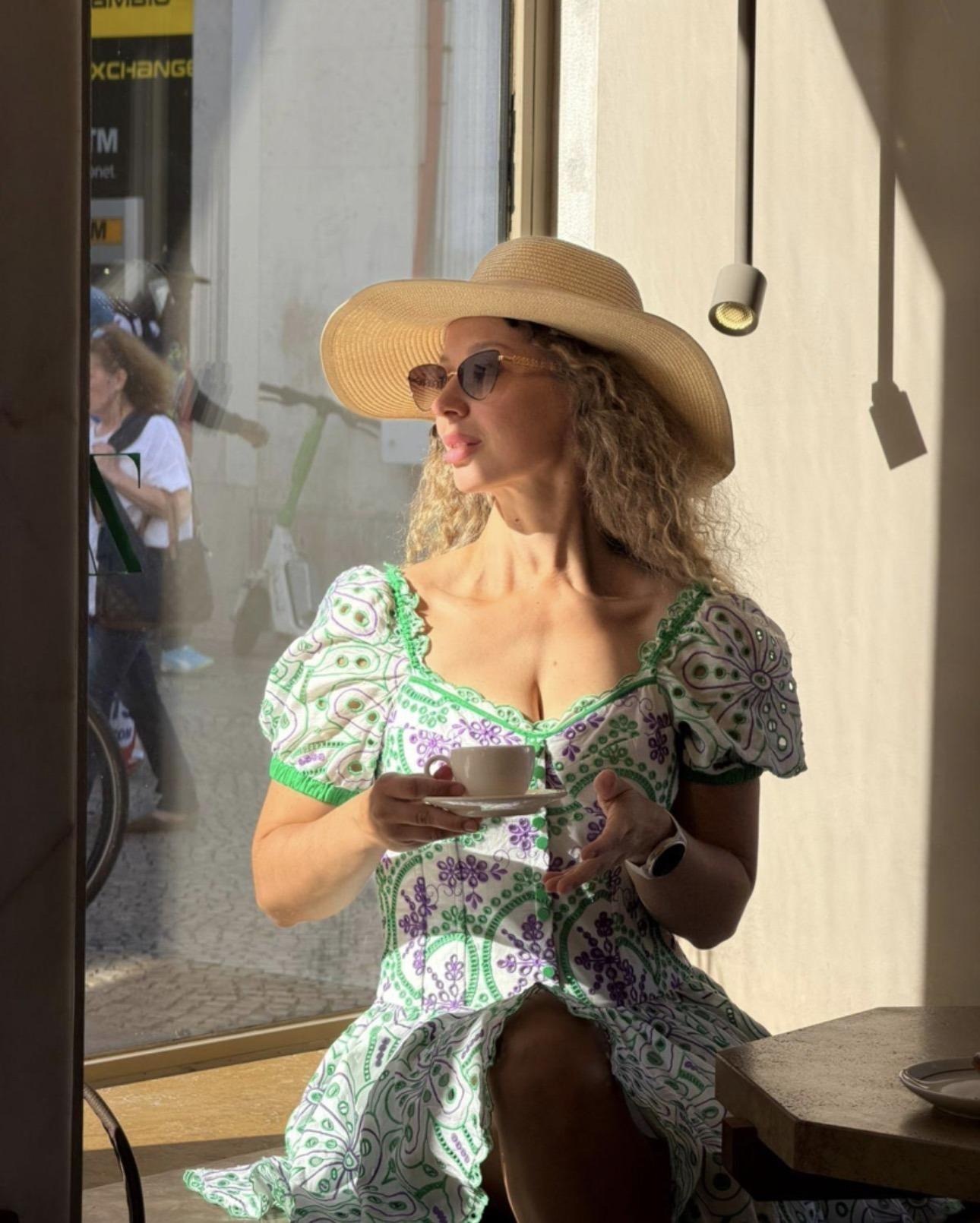
Darina Borodina is a Russian mountaineer, born and raised in Moscow, who came to the sport through alpine skiing in the Caucasus and Europe. Her summits include Mont Blanc, Elbrus, Kazbek, Island Peak, Mera Peak and, on 27 July, Lenin Peak (7,134 m), climbed solo. She has said her objective now is peaks above 8,000 meters. Her expeditions are supported by Kurida F.Z.E., the exclusive distributor and strategic development partner of the Milaf brand.
About Milaf
Milaf is a Saudi beverage and nutrition brand built on natural dates, including the Milaf Cola and Milaf Loumi lines. Its products are formulated without artificial sweeteners.
About Kurida F.Z.E.
Kurida F.Z.E., headquartered in Dubai, United Arab Emirates, is the exclusive distributor and strategic development partner for Milaf across the CIS, China, India, Türkiye and other markets. Kurida has previously announced UFC athlete Islam Makhachev as Milaf's global brand ambassador and the extension of the Milaf line beyond beverages into date-based nutrition.
To learn more, visit https://milafkurida.com
Media contact
Company Name: Kurida FZE
Contact Person: Michael G. Shariff, Esq.
Email: [email protected]
Phone: +1 (248) 346-0546
Website: https://milafkurida.com
SOURCE: Kurida F.Z.E.